

Where should vegetable beds go?
Vegetable gardens usually need the brightest, most open part of the yard, especially for tomatoes, peppers, squash, cucumbers, beans, and melons.
Sunpatch is a free 2D garden sun planner: sketch your yard, drop in the things that cast shade - buildings, fences, trees - and see where sunlight lands through the growing season. It uses a simple overhead map, so you can plan planting spots without building a full 3D model or signing up for a paid tool.
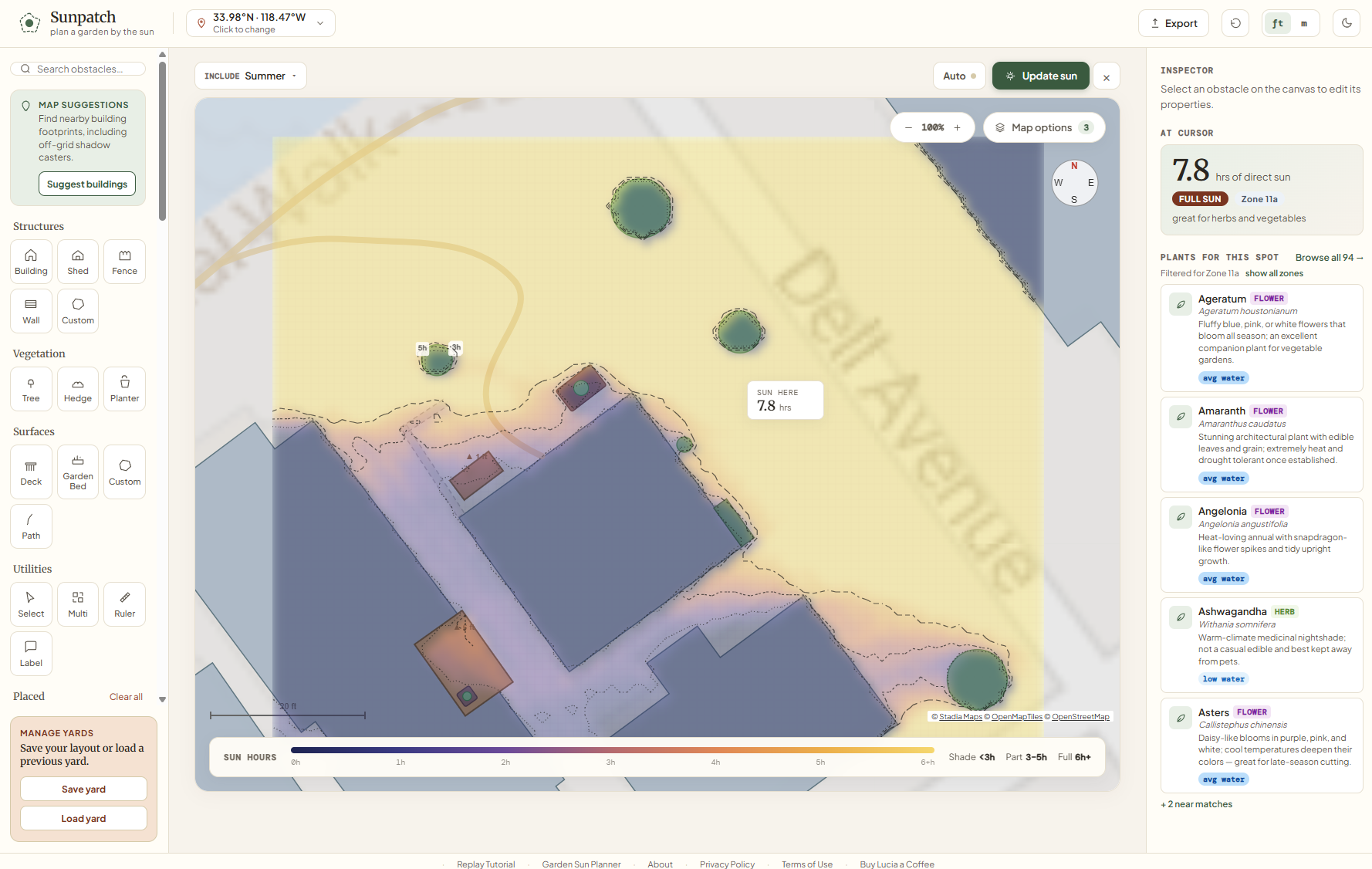
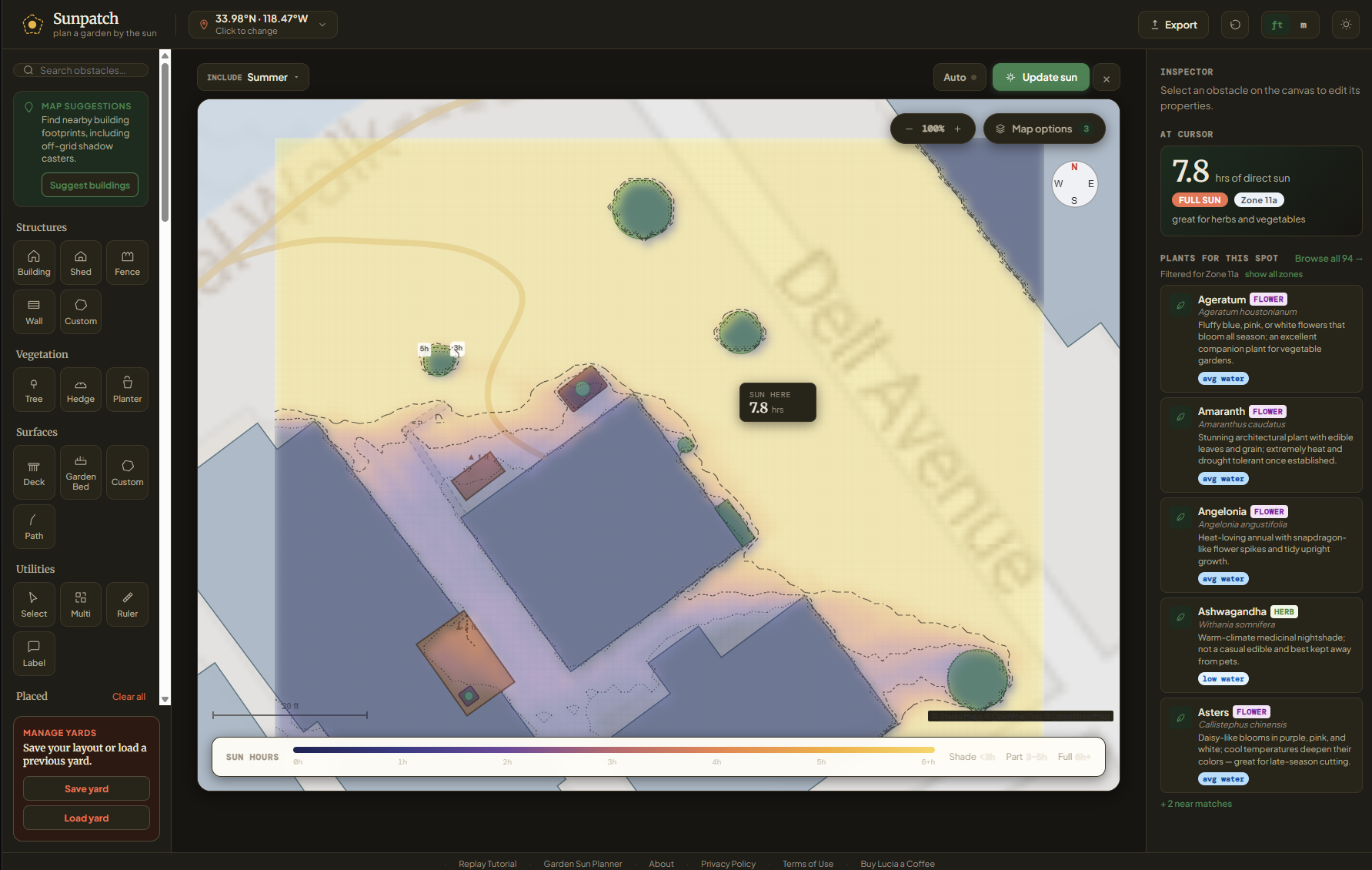
Most planting advice leans on phrases like full sun or partial shade. In a real yard, those labels shift with the hour, the season, and whatever happens to be casting shade nearby. A quick 2D map is often enough to make better garden decisions without slowing you down.
A spot beside the fence might get morning sun, fall into shade by lunch, then open back up by late afternoon. A map turns those guesses into something you can actually plan around.
Houses, garages, sheds, fences, hedges, trees: they all eat into your growing space in different ways. Sunpatch lets you draw them with simple shapes so nothing surprises you come planting season.
Sketch, calculate, adjust, repeat. Sunpatch is built for early layout decisions, when you want useful sunlight answers before buying plants or moving heavy containers around.
The goal is simple: create a practical yard sun map before you commit to beds, containers, or new plants. You do not need an account, a paid plan, or a full 3D scene to get started.
Sun angle depends on latitude and season, so start with the place where the garden will grow.
Add buildings, fences, trees, and other objects as simple 2D shapes that affect your yard's direct sunlight.
Sunpatch evaluates the sunny, partially shaded, and shaded areas across the growing season while keeping the planner lightweight.
Use the map to compare spots before you dig anything in, buy new plants, or haul containers around.
Plant tags are handy, but they're really just shorthand. A garden sun planner helps turn those labels into actual hours of direct light for your specific yard, the same scale Sunpatch paints across your map.
Sunpatch is built for the early layout decisions that make the rest of a garden plan easier.
Vegetable gardens usually need the brightest, most open part of the yard, especially for tomatoes, peppers, squash, cucumbers, beans, and melons.
Yes. Partial shade can be useful for lettuce, spinach, cilantro, parsley, mint, many flowers, and seating areas that would be too hot in full afternoon sun.
The sun rides higher in summer and lower in winter. The same fence or roofline can throw surprisingly different shadows on the same bed depending on the time of year.
For garden layout, a clear overhead map is usually faster than a detailed 3D model. Sunpatch focuses on the planting question: which spots get enough direct light?
Sunpatch estimates direct sunlight from the objects you draw. It's still a good idea to check local conditions like weather, slopes, overhangs, and reflective surfaces.
Open Sunpatch, sketch a quick 2D yard map, and let the sun and shade do the planning work for you.
Open the garden sun planner